
Using polyurethane (PU) foam sealant for exterior window gaps is a very common and effective practice, but it’s important to use the correct type of foam and follow up with an exterior-grade sealant for complete waterproofing and longevity.
Here is a breakdown of the best practices:
Choose the Right PU Foam Sealant: Window & Door Low-Expansion Foam
The critical selection factor is choosing a foam specifically designed for windows and doors.
- Low Expansion/Low Pressure: This type of foam is engineered to expand minimally and cure with very low pressure. This prevents it from bowing, warping, or distorting the window frame, which can happen with standard, high-expansion PU foams.
- Sealing and Insulation: This foam fills the gap between the window frame and the rough opening, creating an excellent thermal and acoustical barrier. Cured, closed-cell PU foam is inherently air-tight and water-resistant (Source 2.1, 3.3).
The Key to Exterior pu foam Waterproofing: Covering and Sealing
While the foam itself resists moisture, it is generally not UV-resistant (Source 3.2). Exposure to sunlight (UV rays) will cause the foam to break down, crumble, and fail over time.
Therefore, for a durable, truly waterproof exterior application, the cured foam must be covered:
- Trim the Foam: Once the foam is fully cured (usually within an hour or two), use a utility knife to carefully trim any excess foam flush with the exterior wall surface or window frame.
- Apply an Exterior Sealant: The trimmed gap needs to be covered with a highly flexible, durable, and UV-resistant exterior sealant. Recommended types include:
- Polyurethane Sealant (Caulk): Offers strong adhesion and is very durable, often preferred for use over porous materials like concrete or masonry. (Source 1.2, 4.2)
- High-Quality Silicone Sealant (Neutral Cure): Excellent weather resistance and flexibility for non-porous surfaces like vinyl or metal frames. (Source 4.2)
- Install Trim/Molding: The most common practice is to install exterior window trim (e.g., wood, PVC, composite) over the sealed foam to protect it completely and provide a finished look (Source 1.4). You then seal the edges of the trim to the wall and the window frame with the exterior caulk.
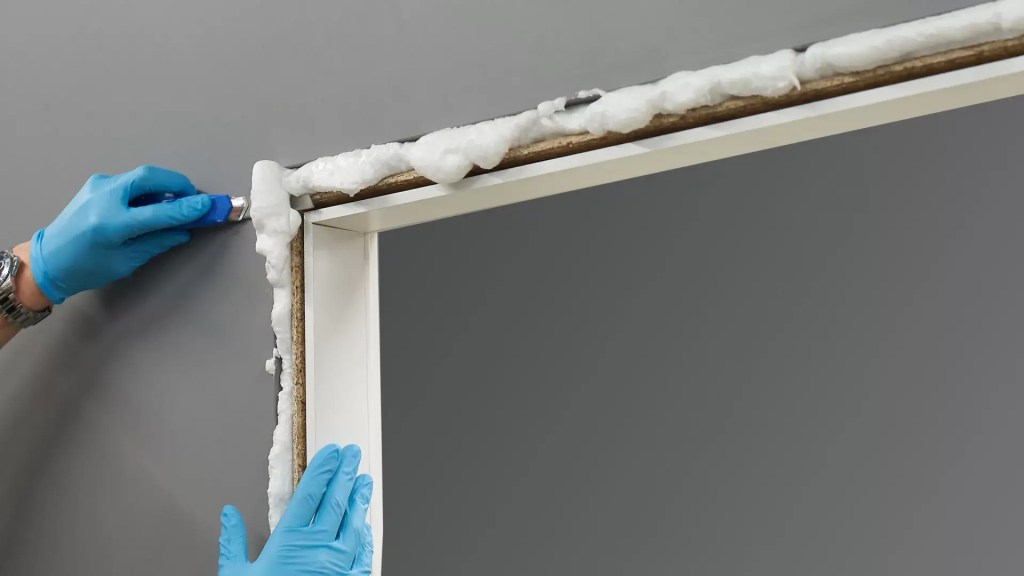
How to Apply PU Foam Sealant Correctly: A Step-by-Step Guide
What You’ll Need:
- PU Foam Canister: Get one labeled for “Windows & Doors” or “All-Season.” These are often low-pressure and have less expansion, which is better for window frames to avoid distortion.
- Applicator Gun: Essential for controlled application.
- Protective Gear: Gloves, safety glasses, and old clothes (foam is incredibly sticky and hard to remove).
- Water Spray Bottle: Moisture helps the foam cure and expand properly.
- Utility Knife: For trimming.
- Sealant & Caulk: High-quality, paintable, flexible exterior caulk (e.g., silicone or polyurethane caulk) and a caulking gun.
- Paint & Primer: If you plan to paint over the seal.
The Process:
- Preparation is Key:
- Clean the Gap: Remove all old caulk, loose mortar, dirt, and dust from the gap around the window frame. A clean, dry surface is vital for good adhesion.
- Dampen the Surface: Just before foaming, lightly mist the gap and surrounding surfaces with water from the spray bottle. Do not oversaturate.
- Application:
- Shake the canister vigorously for about a minute.
- Attach it to the applicator gun.
- Apply Sparingly: Hold the gun upside-down and fill the gap from the bottom up, in a slow, steady motion. Only fill the gap to 1/3 to 1/2 of its depth. The foam will expand 2-3 times its size. Overfilling will cause a huge, messy cleanup and can warp the window frame.
- Curing:
- Let the foam cure completely. This can take 2-8 hours depending on the product, temperature, and humidity. Refer to the can’s instructions. It will change from a tacky, yellow color to a dry, light beige.
- Trimming:
- Once fully cured, use a sharp utility knife or a fine-toothed saw to trim away the excess foam. Cut it back flush with the window frame and wall.
- The Essential Waterproofing & UV Protection:
- Apply Exterior Caulk: Run a continuous, smooth bead of high-quality exterior caulk over the entire trimmed foam seam. This is your primary waterproofing and UV shield.
- Tool the Caulk: Smooth the caulk bead with a wet finger or tool to ensure a good seal against both the window frame and the wall.

Use Low-Expansion PU Foam to fill and insulate the gap, and use a durable, UV-resistant exterior caulk or trim to create the final, long-lasting waterproof barrier.
Summary: Do’s and Don’ts
| Do’s | Don’ts |
|---|---|
| ✅ Wear gloves and glasses. | ❌ Leave foam exposed to sunlight. |
| ✅ Dampen surfaces before applying. | ❌ Overfill the gap. |
| ✅ Fill the gap from the bottom up. | ❌ Use on wet or frozen surfaces. |
| ✅ Trim after full curing. | ❌ Skip the final layer of exterior caulk. |
| ✅ Seal with exterior-grade caulk. | ❌ Try to clean uncured foam with water; use a dedicated foam cleaner or acetone immediately after a spill. |
By following these steps, your PU foam sealant will create a durable, waterproof, and insulating seal around your exterior windows that will last for years.
 English
  Español de México
  Français
  Русский
  Deutsch
  Türkçe
  日本語
日本語  한국어
한국어